

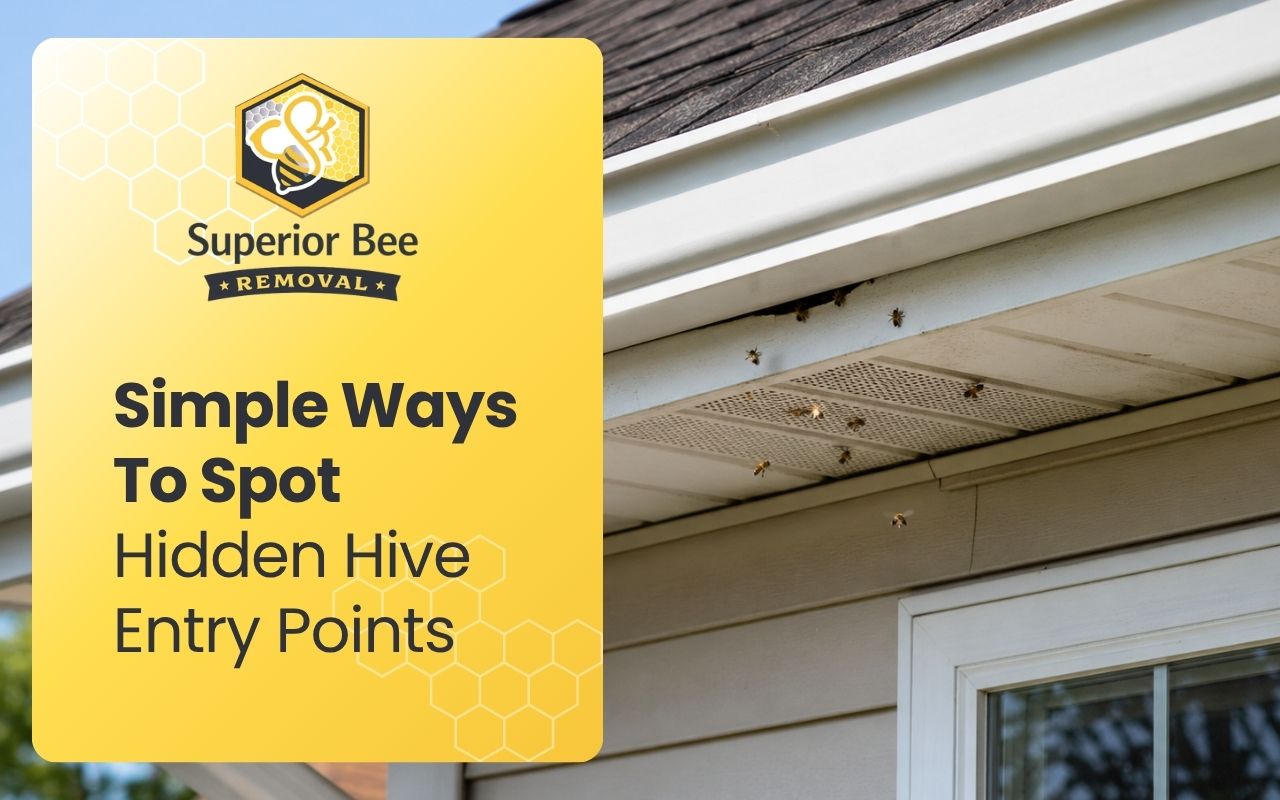
Simple Ways To Spot Hidden Hive Entry Points
Hidden hive entry points can turn quiet spaces into busy bee homes before you notice a clear problem. Small roof gaps, wall cracks, and open vents may let bees move inside and settle near your living areas.
At Superior Bee Removal, we help homeowners understand what to watch for and when to act. Therefore, this guide explains simple signs, risks, prevention steps, and safe ways to handle bees without harming your home.
Common Gaps That Let Bees Enter Your Home
Many hidden hive entry points start as tiny cracks near the roof, siding, vents, or trim. Bees entering roofline areas often use spaces around shingles, soffits, gutters, or loose flashing because these spots are warm, dry, and easy to reach.
Open seams where siding, stucco, brick, or wood meet.
Small holes near vents, pipes, cables, and roof edges.
Loose screens, damaged flashing, and worn attic vents.
Bees in stucco walls may also enter through cracks caused by age, weather, or weak patching. As a result, a small exterior opening can lead to a large hive inside a wall void.
Bees Choose Quiet Spaces Inside Homes
Bees often choose enclosed spaces because they protect the colony from rain, wind, heat, and predators. In addition, walls and attics can offer steady warmth, which helps bees build comb and store honey more easily.
Nearby flowers, gardens, and trees also make a home more inviting. When bees find a dry cavity with enough room, they may mark it with scent and guide more bees to the same location.
Early Signs Of Bees Behind Walls And Rooflines
Wall void hive signs can be easy to miss at first. However, steady buzzing behind drywall, stains on ceilings, or bees moving in and out of one small area may point to a hidden colony.
Buzzing sounds from walls, ceilings, or attic spaces.
Bees flying to one roofline, vent, or wall opening.
Sweet smells, sticky stains, or small debris near gaps.
Attic bee access is often found near ridge vents, gable vents, and broken roof tiles. Therefore, checking these areas from a safe distance can help you notice a problem early.
Damage Hidden Colonies Can Create Over Time
Hidden hive entry points can lead to honey, wax, and hive debris inside walls or ceilings. Over time, these materials may damage insulation, stain drywall, attract pests, and create moisture problems.
Large hives can also add weight inside narrow spaces. For that reason, early removal and cleanup may help prevent deeper repairs, especially when bees have been active for weeks or months.
Safety Concerns From Bees Near Living Areas
Hidden hive entry points near doors, windows, patios, or children’s play areas can create daily stress. Bees may defend the hive if people, pets, tools, or yard work get too close.
Stings can be painful, and they can be more serious for people with allergies. In addition, honey and wax near wiring or lights may increase home safety concerns, so careful inspection matters.
Simple Prevention Steps For A Safer Exterior
Prevention starts with regular checks around the outside of your home. In many cases, sealing small openings early can stop bees before they build a colony inside a wall or attic.
Seal cracks around trim, stucco, vents, pipes, and cables.
Repair loose flashing, damaged screens, and broken roof tiles.
Keep plants trimmed away from siding and roof edges.
For service support, our team can review problem areas through our bee removal services. You can also visit our home page to learn more about safe bee care.
Frequently Asked Questions
Can bees really enter through very small gaps?
Yes, bees can use tiny openings near vents, rooflines, trim, and wall seams. Once inside, they may build comb in a protected space that is hard to see.
What are common signs of bees in stucco walls?
Common signs include steady bee traffic, buzzing in one wall area, small stains, and bees entering cracks in the stucco. These signs should be checked carefully.
Is it safe to seal an opening right away?
No, sealing active bees inside can make the problem worse. Instead, the hive should be located and removed before the entry point is closed.
When should I call Superior Bee Removal?
Call us when bee traffic stays focused on one area, buzzing comes from inside, or you notice possible hive stains near walls or ceilings.
Can a hidden hive come back after removal?
Yes, bees may return if wax, honey, or the opening remains. Proper cleanup and sealing help reduce the chance of another hive forming.
Safe Help For Lasting Bee Removal Results
Hidden hive entry points should be handled with care because the real hive may sit deep inside a wall, attic, or roofline. We focus on safe removal, clear guidance, and practical steps that help protect your property.
We are ready to help when signs point to a hidden colony. For local support, visit our Escondido beehive removal page or contact us through our contact page.